
Fake Prize and Sweepstakes Scams: Why Real Winners Never Pay to Claim
"You've won!" calls and texts promising lottery jackpots or Publishers Clearing House-style prizes are scams designed to extract fees and personal data. Here's how they work.
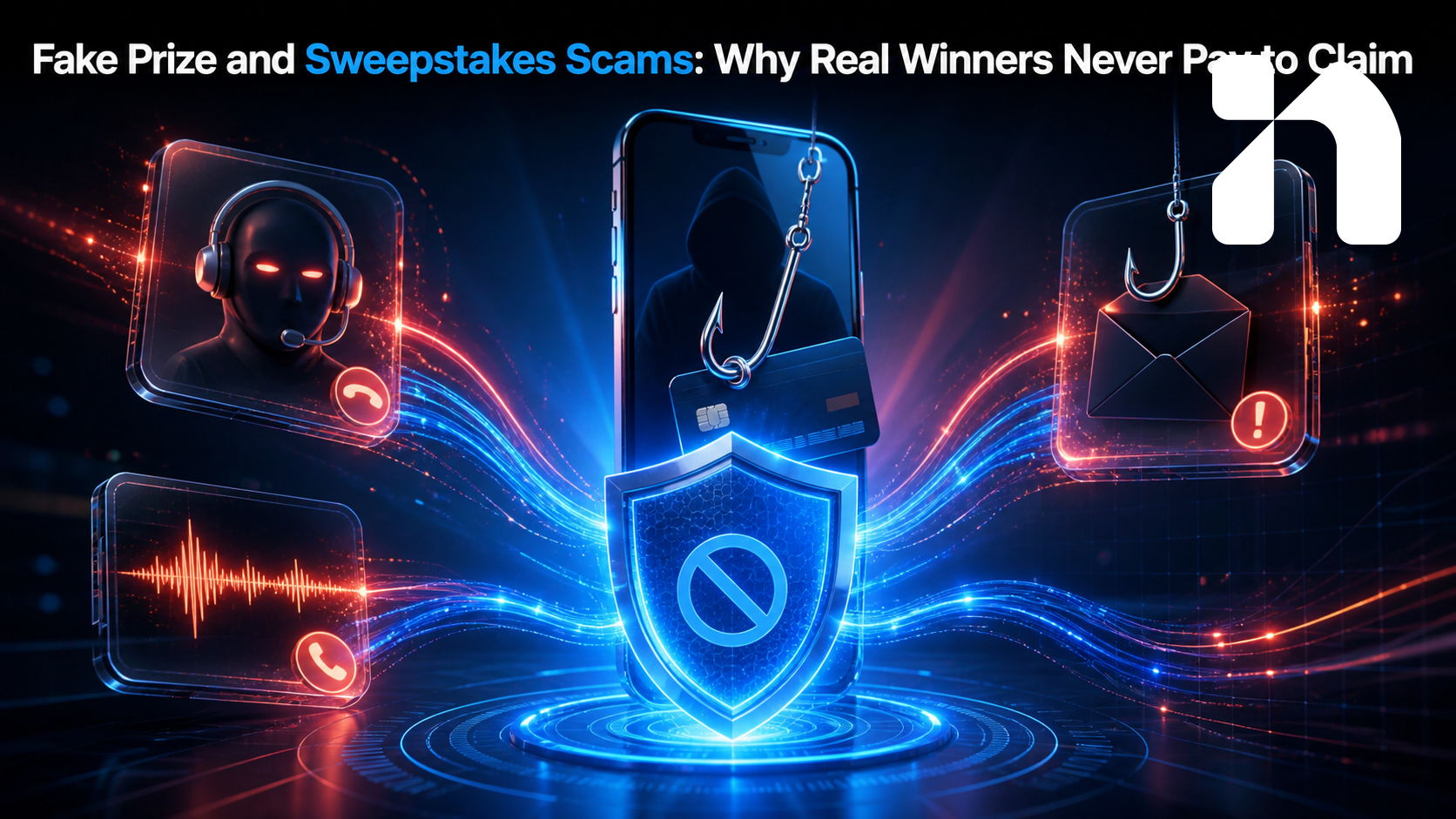
"You've been selected to win the Publishers Clearing House Super Prize!" The caller is friendly, maybe claiming to be from a real sweepstakes you vaguely remember entering, and the prize is life-changing. There is just one small formality: a processing fee, or taxes owed upfront, or a prepaid card to "activate" your winnings. This is the fake prize scam, one of the oldest and most profitable phone frauds in the United States, and it thrives on a simple truth most people forget at exactly the wrong moment — real prizes never require the winner to pay anything.
How the scam unfolds
Prize scams follow a script refined over decades. It usually starts with an unexpected call, text, email, or social media message announcing you have won, been "selected," or been "entered into the final drawing." The scammer may cite a real organization — the Publishers Clearing House name is used constantly because nearly everyone recognizes it from TV — or a fake lottery, a foreign "government giveaway," or a retailer's supposed anniversary sweepstakes.
Then comes the catch. To "release" your winnings, you will be asked to pay something first:
- Taxes or fees upfront. "We just need the IRS tax on the prize before we can release it." Real sweepstakes withhold taxes internally or issue a tax form; they never ask winners to send money in advance.
- Shipping or "activation" fees. Sometimes just a small amount, designed to be paid with a gift card or wire transfer — methods that are hard to trace and impossible to reverse.
- Bank details "for direct deposit." This harvests your account information for later theft, often combined with a request to "verify" your identity with a Social Security number or copies of documents.
- A "refundable deposit" that is neither refundable nor a deposit.
The moment money leaves your hands, the scammer's job is done — and they often stay in contact afterward, promising a bigger prize and requesting more fees for weeks or months.
Why real prizes never require fees
This rule is universal and non-negotiable, and it is confirmed by the Federal Trade Commission: under US law, if you have to pay to enter or to claim, it is not a legitimate prize — it is a lottery, and any "sweepstakes" that asks for money to release winnings is committing fraud. Legitimate operations like the actual Publishers Clearing House, state lotteries, and retailer giveaways handle taxes through tax withholding or a tax form you file at year-end. They deliver prizes by check, often in person for major wins, and never ask for gift cards, wire transfers, cryptocurrency, or cash handoffs.
The same logic applies to the "you must be present to win" pressure tactic. Legitimate contests notify winners through official channels and give them reasonable time to respond. They do not threaten that a prize will vanish unless you pay within the hour.
Red flags in the moment
When an unexpected "you've won" message arrives, check it against these signals:
- You entered nothing. You cannot win a contest you never entered, no matter how many details the caller knows about you.
- Payment first, prize later. Taxes, fees, deposits — any request for money before delivery is disqualifying.
- Gift cards, wires, crypto, or cash couriers. No legitimate business asks for payment this way, ever.
- Pressure to keep it secret. Scammers isolate victims by warning them not to tell family or "other agencies" until the prize is released.
- A check that arrives with instructions to pay part of it back. Fake prize checks look convincing, but the bank will reverse them days later, leaving you responsible for the money you sent.
- A caller who knows your name and address. That is public record or a data breach artifact, not evidence of legitimacy.
Reporting a prize scam
If you or someone you know has been targeted, file a report with the FTC at ReportFraud.gov, which feeds enforcement actions against sweepstakes fraud rings. The Publishers Clearing House website itself warns consumers about imposters and asks people to report fake PCH contacts. Your state attorney general's office also handles consumer fraud complaints, and the AARP Fraud Watch Network maintains a helpline specifically useful for older adults, who are disproportionately targeted by this scam.
If money was sent via wire or gift card, contact the wire service or gift card issuer immediately — recovery is unlikely, but fast action occasionally works. And watch for the inevitable follow-up: "recovery agents" who call pretending they can retrieve your losses for another fee are the same scammers wearing a different hat.
Keeping the pitch out of your phone
Prize scams arrive by every channel — calls, texts, emails, even physical mail — so layered defenses help. A call-blocking app like NoCall can flag known prize-fraud numbers before you answer, and reporting suspicious contacts through your carrier's spam tools sharpens those filters for everyone. The mental firewall, though, is the one that always works: a real prize is money coming to you. If someone asks you to send money to get money, you are not a winner — you are the target.
Sources and review
Reviewed:
Numbering, carrier tools, and reporting procedures can change. Verify sensitive steps with the linked primary authority.
Article details
Editorial content reviewed by NoCall with practical context for spotting suspicious calls and messages.
Received a suspicious call?
Look up the number in NoCall before sharing data, calling back, or clicking any link.
Search a phone number or a company name (Bank of America, Verizon and AT&T...) to check if it has been reported as spam.